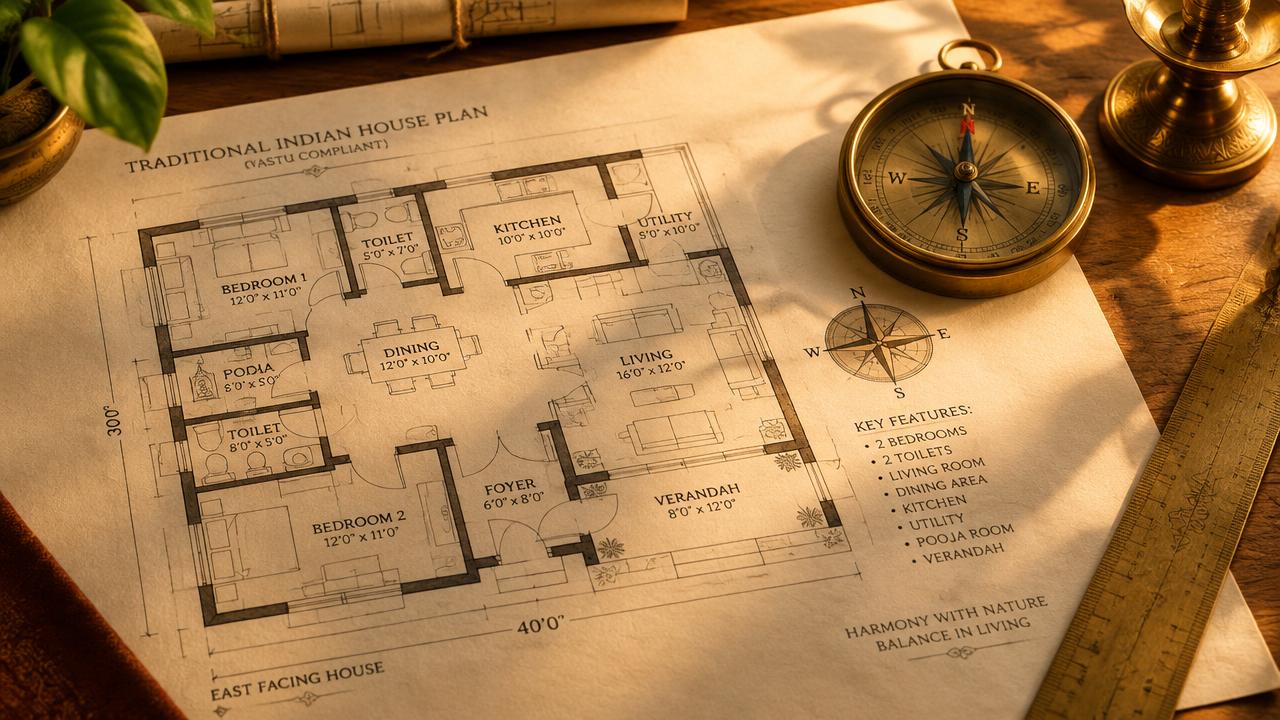
Vastu Shastra is a traditional Indian system of architectural and spatial guidance, rooted in ancient texts, that gives directional and layout preferences for siting a building, orienting rooms and placing openings — it is a cultural and traditional practice followed by choice by many clients and designers in India, not a statutory building code or legal requirement. No municipal corporation, development authority or the National Building Code treats Vastu compliance as a condition for plan sanction; approvals are granted strictly against bye-laws, FAR/FSI, setback and structural safety requirements regardless of Vastu.
A site engineer or architect's professional duty is to deliver a safe, code-compliant, structurally sound building first; where a client requests Vastu-aligned planning, it should be accommodated as a layout preference worked into the design alongside — never instead of — structural safety, natural light and ventilation requirements, fire egress, and approved bye-laws. Treat a request to 'move a column for Vastu' or 'skip a required setback for Vastu' as a red flag: structural and statutory requirements always take precedence, and a qualified structural engineer's approval cannot be overridden by directional preference.
This course describes commonly followed traditional Vastu directional principles as cultural practice, stated plainly as tradition rather than as engineering fact, so that site teams can discuss and accommodate client preferences intelligently within the bounds of safe, approved construction.
Remember on site
- Vastu Shastra is a traditional practice, not a legal or statutory building code — plan sanction never depends on it.
- Structural safety, fire egress, light/ventilation and bye-law compliance always take precedence over any Vastu preference.
- A request to alter structure or skip a setback 'for Vastu' is a red flag — never override engineering or statutory requirements.
- This course presents Vastu principles plainly as tradition, to help teams accommodate client preference without compromising safety.
Check yourself
Is Vastu Shastra a statutory requirement for building plan approval in India?
What should take precedence if a Vastu preference conflicts with a structural requirement?
How should this course's Vastu content be understood?
What is a professional's primary duty when a client requests Vastu-aligned planning?
Which authority treats Vastu compliance as a condition for plan sanction?